
1 in 3 Teen Boys Gambled Last Year. What Are We Teaching Them About It?

They're seeing the ads, watching the influencers, and placing the bets. Here's how health class can meet them there.
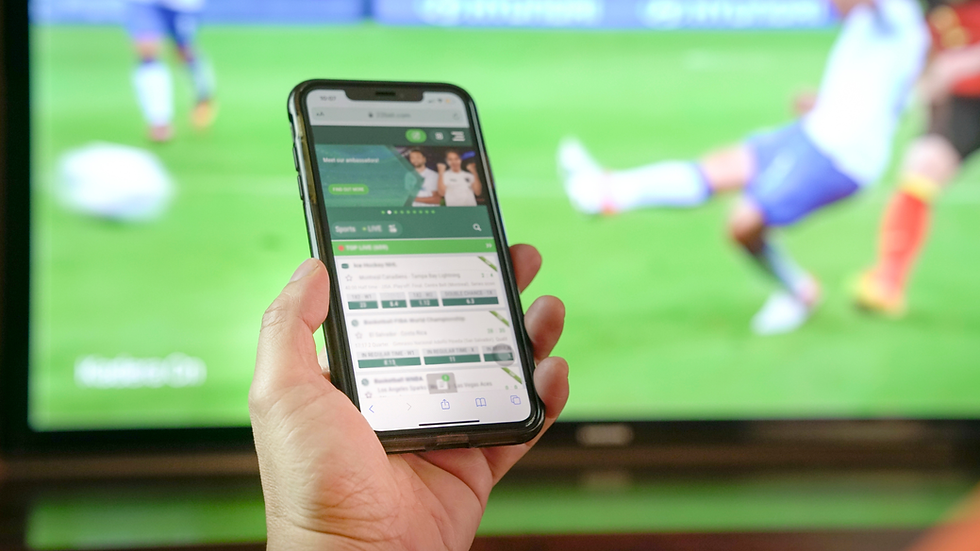
I was meeting with a Health & Wellness Coordinator for a Massachusetts school district when I asked what one of the biggest issues they were seeing among their teens was. I’m used to hearing vaping, cyberbullying, or screen addiction, but this one caught me off guard. She said teens gambling was a huge problem in their schools.
I had to learn more. First off, where in the world do teens get money to gamble?!?! But what are they gambling on? Then I fell down a rabbit hole that truly shocked me. There are countless apps like DraftKings, FanDuel, and Underdog Fantasy, well-designed, genuinely enticing apps that allow anyone to place bets. (Many have age limits, but they are very easy to bypass.)

They're not hiding in some sketchy corner of the internet. They're on your kid's phone, sandwiched between TikTok and Spotify. What really got me was the language they use. Phrases like "it's free to play," "no purchase necessary," and "bet $1 and win $100!" make it feel less like gambling and more like a game. But make no mistake, real money goes in, and real money comes out. For teens who are already wired for risk-taking and impulse decisions, that line between "just a game" and a gambling problem can disappear fast.
How Common are Teen Gambling Apps Really? And Who's Most at Risk?
Shockingly, 36% of teenage boys between the ages of 11 and 17 say they gambled at some point in the prior year, and for 17-year-olds, that number jumps to nearly 1 in 2. And that's just the kids who admitted it!
According to recent studies, adolescent males ages 11–21 are among those most vulnerable to developing problematic online gambling behaviors. This is most likely due to higher rates of impulsivity, risk-taking behavior, and exposure to gambling culture.
Among boys whose friends gamble, 84% reported gambling themselves, meaning the most powerful force driving teen gambling isn't an app or an ad. It's the kid sitting next to them in class.
How to Talk to Teens About Gambling and Sports Betting
Starting a conversation about addiction and the risks of gambling is NOT the best way to begin. It immediately puts you in the seat of lecturer and know-it-all — and puts them on the defensive, because "it will never happen to me." (I would say... 'typical teen...' but don't we all in someway think this way?!)
Instead, ask them what they already know about sports betting apps.
Are their friends using them? Have they tried one themselves? Be open-minded and listen fully to what they know and how they actually feel about these apps. This builds trust with teens and lets them know you are a safe space they can turn to with any topic.
Then, lead into the pivot questions.
Once they've shared what they know, this is where you shift the conversation from what they think to what they haven't considered yet. You're not correcting them, you're getting curious with them.
Try one of these:
"Do you think the people who made that app want you to win or keep playing?"
"If someone won $200 their first week, do you think that's normal or do you think that's kind of the point?"
"If an app was designed by behavioral psychologists to keep you playing longer, would that change how you feel about it?"
"Do you think there's a difference between skill and luck when it comes to sports betting? How do you know?"
You're not lecturing. You're not warning. You're just asking questions they haven't been asked before and letting their own answers do some of the heavy lifting. That's the moment the conversation shifts from you talking at them to them actually thinking.
The goal isn't to scare them out of it. The goal is to make sure they're making an informed choice, not one made for them by an app engineered to look like a game.
From here, you can naturally steer into the risks and the facts you've learned along the way. But conversations like this aren't meant to cover everything at once. Think of it less as a talk and more as an open door, so that when they are exposed to these apps, they know who to turn to and how to think more critically about what they're seeing.
In the end, the two most important things you want them to walk away knowing are simple:
These apps are purposefully engineered to keep you hooked and betting.
These apps are not a side hustle. They are a money drain dressed up as entertainment.
Full Step-by-Step Activity Helping Health Teachers Address Teen Gambling

If you're looking for a way to have this important conversation in your classroom but with an engaging twist, here is a free outline for an activity your teens will remember. It's a gambling simulation that breaks down the main psychological stages of betting and gambling.
Here's how to play:
You can get the free download with instructions here!
Every student starts with 5 points, have them write it on a sticky note or scrap of paper.
Announce,
We're going to play a quick game. You can choose to play or sit out each round. No wrong answer.
ROUND 1: THE HOOK
Here are the rules. I'm going to flip this coin. If it lands heads, you DOUBLE your points, so your 5 becomes 10. If it lands tails, you lose 2 points. Remember, you can sit out if you want.
Flip the coin.
If heads:
"Let's GO! Everyone playing, double your points. You now have 10."
If tails:
"Rough start, everyone playing, subtract 2. You now have 3."
The odds feel great. Most kids will play. Most will win. This is intentional. The stakes are in favor of people winning, and the risk is quite low. This is how much gambing apps/games hook users. Is it "beginners luck" or is it just something to get you a quick confidence boost to you keep going? ROUND 2: ESCALATION
Do you want to continue? If so, decide how many points you want to risk and if you want to bet heads or tails. Write it down. If you win, you gain that many. If you lose, you lose that many. Remember, you can sit out if you want.
Flip the coin.
I want you to notice how you're feeling RIGHT NOW. If you won, are you feeling confident? If you lost, are you feeling like you want to win it back?" Whatever the feeling, just notice.
In Round 2, students get to choose how much they bet, and that feeling of choice makes the game feel more like skill than luck. Students who won Round 1 tend to bet bigger because winning feels like a streak, not a coincidence. Students who lost want to bet big too, not because the odds changed, but because they want their points back.
ROUND 3: THE COMEBACK
If you currently have FEWER points than you started with, meaning less than 5, you get a special comeback chance. You can bet up to DOUBLE what you currently have. So if you have 3 points, normally you could only bet up to 3, but this round you can bet up to 6. Everyone else above 5 points, continue betting as you did in round 2. Remember, you can sit out if you want.
Flip the coin.
In Round 3, "That 'special comeback chance" you offered students? Gambling apps do that too. They're called bonuses, free bets, and second chance offers. They feel like the app is being generous, but what did it actually do? It got you to bet MORE.
ROUND 4: ALL IN
Here's the deal, this final round, losing means you go to ZERO. No matter how many points you have. But winning means you TRIPLE your points. Do you want to play? Write down yes or no. If yes, what's your bet? Heads or tails?
Flip the coin.
Round 4 works because by this point students are emotionally invested in their points, even though they're just numbers on a piece of paper. The all-or-nothing stakes trigger what psychologists call "loss aversion" the brain is so desperate to avoid ending on zero that it will take an irrational risk just to stay in the game.
THE DEBRIEF:
Here are some questions to ask after the game to help teens connect to the risks of gambling.
-Show of hands, how many of you felt something during that game? Excitement, anxiety, frustration, hope? Why? Was there anything at stake in this game?
-What were you telling yourself in those 20 seconds before you decided to play or not?
-Think back to Round 3. If you were losing, did that special comeback offer feel generous, or looking back now, does it feel more like it was designed to manipulate you into risking more?
-Did anyone choose not to play at all, or stop playing midway through? Why? And be honest, how did it feel watching everyone else play and potentially win?
-How many of you are happy with where you ended up? And here's the real question, does that result change how likely you are to want to play again? Does winning make you feel like you're on a roll, or does losing make you feel like your luck is about to turn?"... "And be honest, after this game, do you see yourself as a lucky person or an unlucky person?
Because here's what's wild, that feeling, whatever it is, is exactly what gambling is designed to create. And it's designed to keep you at the table either way.
THE CONNECTION:
Here is a way to shift from, that was a fun game to your core learning objectives in the lesson.
Everything you felt in that game, the excitement, the frustration, the urge to chase your points back, that was all for absolutely nothing. No money, no prize, no real stakes. Now imagine an app, designed by a room full of psychologists and engineers, putting that exact feeling in your pocket. Available 24/7. And this time it's not points. It's real money.
If you want to use this activity, but have the FULL DONE-FOR-YOU LESSON with editable google slides, follow along worksheets, informational video, and refusal skills roleplays then below is the link to grab it now.

Good luck having this conversation/lesson with your teens... and unlike the house, here at LifeFluent, we are actually rooting for you!!
Teach On,
Abby


Comments